

The popular advice about flipping houses is wrong in one important way. The goal isn't a big-looking gross profit on paper, it's margin durability after renovation overruns, longer hold time, and a softer exit price eat into the spread. Recent market reporting shows why that matters, because the typical flipped home in 2025 produced $65,981 in gross profit and a 25.5% return on investment, down from 32.1% the year before, while the 2026 Q1 report showed a modest bounce to 25.4% with national renovation costs averaging $79,000 per project in Q1 2026, up from $50,000 in early 2022 (market reporting on 2025 and 2026 flip profitability).
That is the true test for anyone who wants to buy houses to flip today. The winning deal is the one that still works after financing costs, closing costs, and a conservative resale estimate, not the one that looks exciting in a spreadsheet. In a tighter market, the investor who survives the delay, the permit issue, or the surprise repair is usually the one who underwrote the deal with discipline from the start.
Table of Contents
- Understanding the Current House Flipping Market
- Sourcing Profitable Properties to Flip
- Underwriting Deals for Margin Durability
- Securing Fast Financing for Competitive Offers
- Navigating a Rapid and Efficient Closing
- Frequently Asked Questions About House Flipping
Understanding the Current House Flipping Market
A flip can show a healthy resale spread and still produce a weak result. Gross success does not equal net success once repairs run over budget, the property sits longer than planned, or financing and selling costs rise. The practical question is how much stress the deal can absorb before profit disappears.
Why margin durability matters more than headline ROI
Flipping has become a significant part of the housing market, which also makes competition and pricing more sensitive to changes in capital and demand. U.S. house flipping reached 407,417 flipped properties in 2022, representing 8.4% of all U.S. home sales, according to this historical flip activity data. Earlier activity was also high, with flips near 8.2% of sales in 2005 and reportedly reaching 16% to 20% in Phoenix, Las Vegas, and parts of Florida.
Those periods show how quickly deal volume responds to financing conditions, available inventory, and buyer confidence. Strong resale demand can support aggressive assumptions. Tighter conditions expose them. Investors who keep buying based on headline ROI are vulnerable to small changes in labor, materials, insurance, taxes, or market time.
Margin durability requires a usable buffer, not just a positive spreadsheet result. Underwrite the renovation with room for unknown conditions, model a longer hold than the target schedule, and test the exit price below the optimistic comparable-sales case.
Practical rule: If the deal only works when everything goes right, it's too thin for a flip.
What changed for today's investor
The current market rewards controlled execution more than bargain hunting. In Q1 2026, ATTOM reported a typical flipped home with a 25.4% gross return on investment, a median purchase price of $260,000, and a median resale price of $320,000 (ATTOM Q1 2026 flipping report). The apparent spread must cover renovation work, loan charges, acquisition and resale expenses, utilities, taxes, insurance, and any price reduction needed to sell.
Time has become another direct threat to margin. A recent CNBC report on recent flip margins said the typical hold time reached 165 days in Q1 2026 while flipping activity remained below year-ago levels. Every extra day can add carrying costs and delay the return of invested capital.
A workable flip is therefore a timed operating project. The investor must control scope, make decisions quickly, and preserve enough cash for surprises. A smaller projected return with dependable execution can outperform a larger paper gain that depends on a fast renovation and a full-price exit.
Sourcing Profitable Properties to Flip
The best flips usually start before a property reaches a crowded listing site. Retail buyers see the same photos and the same asking price. Investors who build a sourcing pipeline get first look at situations where the seller needs speed, certainty, or a clean closing.
Build a lead flow instead of chasing one property at a time
The strongest source channels are relationship-driven. Local wholesalers can surface distressed inventory before it's widely marketed, especially when they know a buyer can close and perform. Direct mail aimed at absentee owners can uncover tired landlords, inherited properties, or vacant homes where the seller is more open to a quick transaction. Probate attorneys, estate administrators, and local courts can also expose opportunities when an owner transition creates a time-sensitive sale.
These channels work because they solve a seller problem, not just an investor problem. A motivated seller often values certainty, fewer contingencies, and a fast closing more than a slightly higher but less reliable offer. That creates room for a flip that starts with real equity, not wishful thinking.
- Wholesaler relationships: Stay consistent, answer calls quickly, and review photos plus repair assumptions carefully before committing.
- Absentee-owner outreach: Focus on owners who may want speed, especially where a property sits vacant or underused.
- Probate and estate connections: Build trust with professionals who handle property transitions and can point to legitimate opportunities.
- Neighborhood demand checks: Walk the area, study what retail buyers are buying, and avoid over-improving beyond local expectations.
Match the finished house to the local buyer
A property can be cheap and still be the wrong flip. If the eventual buyer pool wants updated kitchens, clean flooring, and move-in ready condition, the renovation should target that outcome instead of trying to create a luxury home in a middle-market neighborhood. Good sourcing is tied to exit strategy from day one.
The fastest way to lose on a flip is to buy a property that only makes sense because it was “a deal,” not because the neighborhood can support the after-repair value. The seller's reason for selling matters, but so does the neighborhood's ability to absorb the finished product without deep discounting.

Underwriting Deals for Margin Durability
A flip can look profitable at the offer stage and still fail as an investment. Renovation costs rise, resale prices soften, and each extra month adds interest, utilities, insurance, taxes, and management time. Underwriting should therefore protect the margin before the exit price becomes uncertain.
Set a conservative ARV
The after-repair value, or ARV, is a ceiling for underwriting, not a promise. Use the strongest relevant comparable sales, adjust for condition and location, and avoid treating the highest nearby sale as the expected outcome. Recent market reporting shows why a purchase-to-resale spread can shrink quickly once project costs are included (ATTOM Q1 2026 flipping report).
Use the 70% rule as a fast screening test, not as the final analysis. For example, a $260,000 purchase with $79,000 in renovation costs needs a 15% contingency, or $11,850, before financing, holding, selling, and closing costs. The project has $90,850 in rehab exposure. At a 70% purchase-and-repair screen, that cost structure would require an ARV above roughly $501,000 before those additional expenses are considered. If the local comps cannot support that outcome, reject the deal or negotiate a materially lower purchase price.
A conservative ARV will not rescue a bad property. It can keep a workable project from becoming thin.
Stress-test every cost category
A renovation budget needs a documented scope, current contractor pricing, and a reserve for concealed damage. Industry guidance commonly places contingency at 10% to 20% of renovation costs, while rehab, financing, and closing costs can consume roughly 20% to 33% of ARV (contingency and cost guidance). Apply the reserve to the actual renovation budget rather than treating it as available profit.
Run at least three cases before submitting an offer:
- Quick completion: lower rehab spend and a shorter hold, producing a stronger margin that remains sensitive to small delays.
- Moderate overrun: higher-than-planned repairs and a moderate hold, leaving a workable return only if the exit price holds.
- Delayed completion: budget creep, a longer hold, and a slower sale, which can reduce the spread to a thin margin or a loss.
The point is not false precision. It is knowing which assumption breaks the deal first.
Put time into the underwriting
The schedule starts with acquisition and includes inspections, permits, construction, listing, buyer negotiations, and closing. Model every month separately. A delayed permit or failed inspection can extend the hold even when the original renovation plan was sound.
Recent reporting described record renovation expenses and a meaningful share of homes selling below projected after-repair value, reinforcing the need to underwrite both cost inflation and exit-price slippage (CNBC report on recent flip margins). Set a minimum margin after contingency and holding costs, then test the deal against a lower sale price and a longer timeline. If the project works only under the best-case schedule and ARV, the offer is too high.
Securing Fast Financing for Competitive Offers
Conventional financing can work for some buyers, but it is usually a poor fit for a property that needs repairs and a fast close. Flip deals need funding that matches the pace of the opportunity, especially when the seller wants certainty and the house will not qualify for standard financing without work.
Why asset-based capital changes the offer
Hard-money and rehab loans are typically short-term and asset-based, with lenders focusing on the projected after-repair value and the exit plan rather than treating the borrower like a traditional homebuyer. Terms often run from about 6 months to 1 year or longer, and loan caps are commonly around 65% to 75% of ARV, with 70% often used as a ceiling; lenders also often cap loan-to-cost at roughly 80% of total project cost.
That structure matters because the investor is buying time as much as money. A quicker close can protect the deal before another buyer steps in, and clear funding terms can strengthen an offer without the long underwriting cycle that slows conventional financing. The right capital stack lets the buyer compete on certainty, not just price.
Where bridge-style capital fits in a flip
Auction purchases, short option periods, and distressed properties often need fast funding to keep the contract alive. The same applies when the house needs repairs before a bank would consider long-term financing. In those cases, the loan is less about permanent affordability and more about moving the project from acquisition to resale or refinance.
Quick Lending is one option for Houston-area investors who need short-term, asset-based financing for a flip or transition project. Its role is straightforward. It funds investment properties through a process built around faster closings and renovation periods, which can help when timing is tight and the exit plan is already mapped.
Navigating a Rapid and Efficient Closing
Speed matters most when the contract is signed and the paperwork starts moving. That stage is where small delays become expensive, because every extra day can add carrying costs and push the project deeper into the calendar. A clean closing depends on organization, responsiveness, and early coordination with the people who touch the file.
Prepare the file before the lender asks for it
The fastest closings usually happen when the borrower has already gathered the core documents, reviewed title issues early, and confirmed the property can support the intended exit. Title work, zoning checks, and any known property-condition concerns should be addressed before the file reaches the finish line. When those items are left for the last minute, the delay usually lands right when the investor needs momentum most.
A regional lender that understands investor transactions can also help reduce friction during the final stretch. Local closers tend to know which steps get stuck, where title questions usually surface, and how to keep everyone aligned so the file doesn't stall on preventable items.
Practical rule: The closing gets faster when the borrower treats title, insurance, and documentation as part of the deal, not as admin tasks after the deal.
Keep the process tight from contract to keys
The borrower should stay in contact with the title company, lender, and any other parties that need to move in sequence. If one party is waiting on another, the file slows down quickly. That's especially true in investor deals, where the property may need to be taken over and rehabilitated without losing days to confusion or rework.
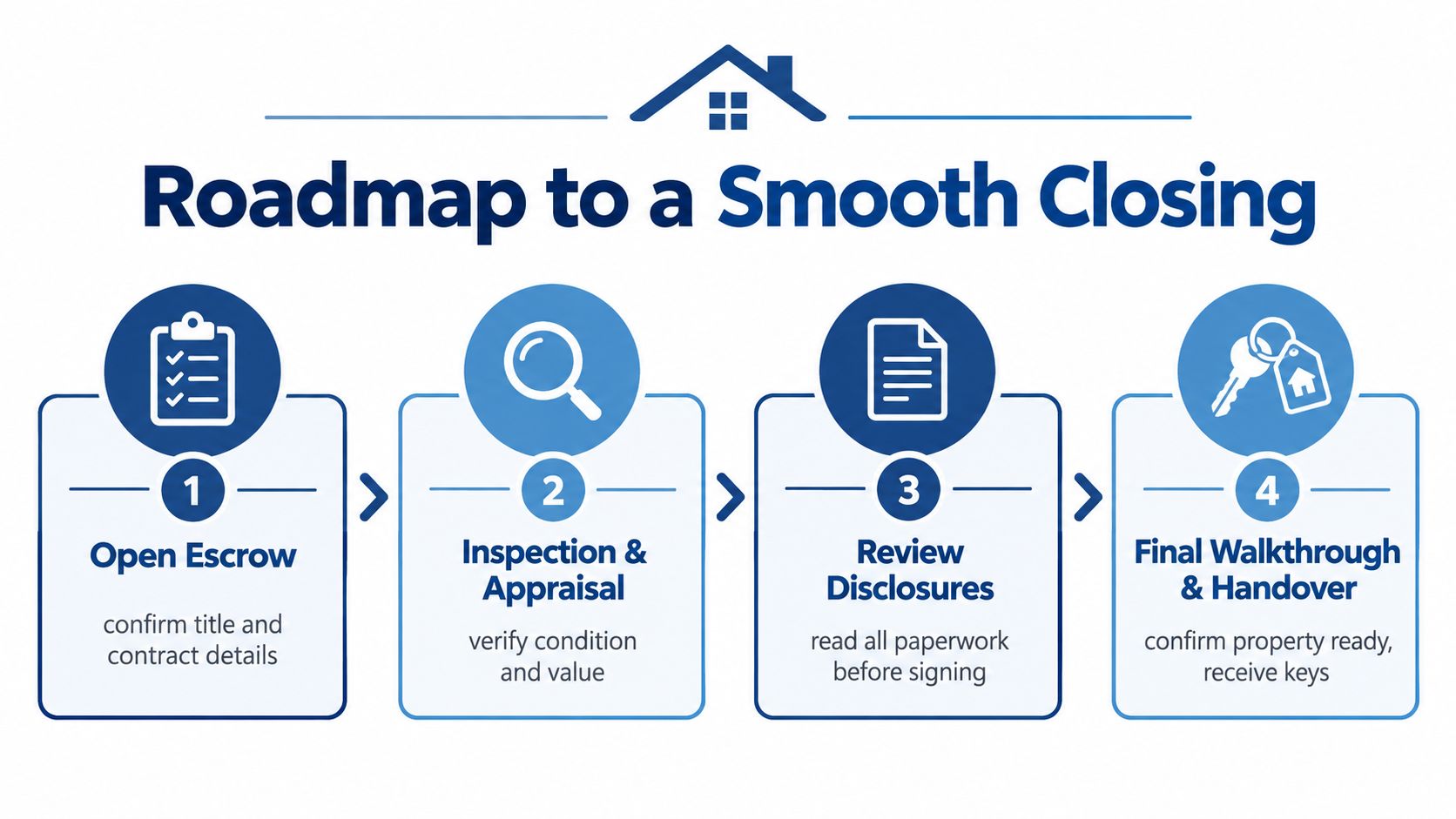
The checklist below is the mindset that keeps a closing efficient, not the paperwork itself. Each step protects the timeline and reduces the chance of a last-minute surprise.
- Open escrow: confirm title and contract details early.
- Inspection and appraisal: verify condition and value before the file drifts.
- Review disclosures: read every document before signing.
- Final walkthrough and handover: confirm the property is ready and receive the keys.
Frequently Asked Questions About House Flipping
Is flipping houses still profitable?
It can be, but only if the deal holds up after rehab, holding, and closing costs. As noted earlier, recent reporting showed profits have tightened, so a gross spread that looks acceptable on paper can still leave a thin net margin once time and cost creep are fully counted.
What is the biggest mistake first-time flippers make?
They treat gross profit as the finish line. Budget overruns, softer resale assumptions, and carrying costs can turn a deal that sells above purchase price into a weak net result. Margin durability matters more than headline ROI.
How do taxes work on a flip?
Tax treatment depends on the facts. When a property is bought mainly to resell to customers, renovated extensively, and marketed quickly, the IRS and courts generally look at the activity more like a business, which can make the profit more likely to be treated as ordinary income rather than capital gain (tax treatment overview). Because classification depends on the circumstances, a licensed tax professional should review the structure before the deal closes.
Are renovation costs deductible right away?
Usually not in the way many beginners expect. Under tangible property rules, a cost that betteres, restores, or adapts a property is generally a capital improvement, while a repair only maintains the current condition, so most flip renovation work is usually capitalized into basis rather than deducted immediately (capital improvement guidance). That distinction affects underwriting before work starts, not after the project is finished.
What should a borrower look for in financing?
The loan has to match the project's pace, the property's condition, and the exit plan. Short-term, asset-based financing is built for deals where speed matters and the lender underwrites the property and execution, not a long consumer-mortgage timeline. Borrowers who want a practical overview can review the Quick Lending blog for investor-focused guidance.
Quick funding only helps if it protects the spread. A strong flip loan gives room for rehab delays, resale friction, and a softer exit without forcing the borrower into a bad sale. That is why the underwriting has to account for margin compression before the offer is signed.