

A construction project can look profitable and still fail a lender's review. The FDIC's construction-lending guidance explains why: banks must evaluate individual real estate loans within written underwriting policies and broader risk controls, not decide only whether the finished property looks valuable.
Construction loan requirements generally center on eight areas: a detailed scope of work, a realistic budget and draw schedule, borrower experience, property valuation, an exit strategy, contractor qualifications and insurance, financial liquidity, and permits with a credible timeline. Investors who prepare these materials together give the lender a clearer picture of what will be built, who will complete it, and how the debt will be repaid.
The distinction matters for Houston investors acquiring distressed homes, renovating rentals, or building on infill lots. A property that needs substantial work may require financing designed around acquisition, construction, and a defined sale or refinance rather than immediate eligibility for a conventional mortgage.
Preparation advantage: A complete application isn't just a larger stack of documents. It's a consistent explanation of the project across the scope, budget, valuation, and repayment plan.
Bank financing and short-term asset-based lending can place different emphasis on borrower finances and property fundamentals. Neither approach eliminates completion risk. Preparing the following materials early helps investors identify funding gaps before a time-sensitive purchase depends on an unresolved assumption.
Table of Contents
- 1. Detailed Scope of Work and Renovation Plan
- 2. Construction Budget and Draw Schedule
- 3. Borrower Experience and Track Record
- 4. Property Valuation and After-Repair Value Analysis
- 5. Exit Strategy
- 6. Contractor Qualifications and Insurance
- 7. Financial Profile, Liquidity, and Reserves
- 8. Permits, Plans, and Project Timeline
- Construction Loan Requirements at a Glance
- Getting Your Project Ready to Fund
1. Detailed Scope of Work and Renovation Plan
A lender can't evaluate a renovation from a description such as complete interior remodel. The reviewer needs to know what will change, what will remain, and whether the proposed improvements match the property's intended resale or rental use.
Fannie Mae's renovation servicing guidance identifies plans and specifications, a construction contract, and a loan agreement as documents defining the work and funding arrangements. Although those program rules aren't universal hard money requirements, they illustrate why a documented scope matters.

Describe work that can be priced and verified
A useful scope separates demolition, structural repairs, mechanical systems, finishes, and exterior work. Each entry should identify the location, intended materials or finish level, and the phase when the contractor expects to complete it.
- Required repairs: Identify safety, weatherproofing, structural, and functional problems before cosmetic upgrades.
- Optional improvements: Separate upgrades that could be removed if the budget changes.
- Supporting evidence: Match property photographs and inspection notes to relevant scope items.
For example, a flipper planning kitchen improvements, bathroom updates, flooring, and exterior paint should describe those tasks individually. A rental investor may instead prioritize roof and HVAC replacement before installing new finishes, reducing the chance that later repairs damage completed work.
A contractor walkthrough helps expose assumptions before the application reaches underwriting. Hidden conditions can't always be identified beforehand, but known problems shouldn't disappear inside a miscellaneous allowance.
Quick Lending's renovation loan application guide provides additional preparation guidance. The strongest scope is specific enough for the contractor, lender, and inspector to recognize the same finished result.
2. Construction Budget and Draw Schedule
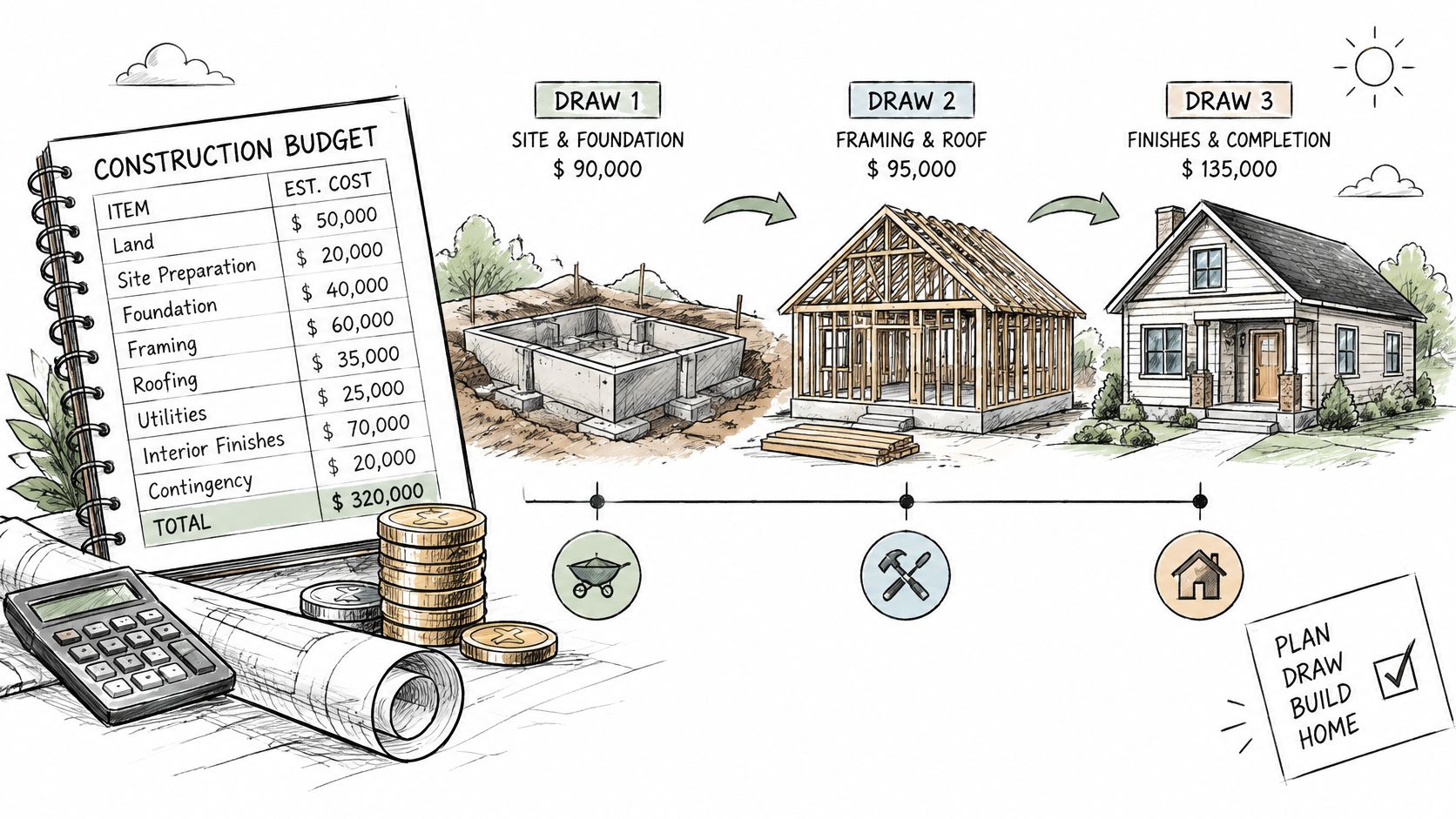
A low contractor bid isn't necessarily a complete project budget. Lenders need to understand both total project cost and when cash must be available, including expenses that arise before a reimbursable construction milestone.
A practical budget separates labor, materials, permits, professional services, insurance, taxes, utilities, financing expenses, and contingency. Purchase costs and construction costs should reconcile with the overall sources-and-uses statement, showing where the money comes from and where it goes.
Built's construction risk-management guidance describes controlled draws supported by inspections and documentation, and identifies a 10–15% contingency reserve as a common planning allowance. The appropriate reserve still depends on property condition, scope uncertainty, and the lender's requirements.
Match payments to verifiable progress
For a small residential build, a proposed schedule might associate advances with foundation work, framing, mechanical rough-ins, and final completion. The contractor's payment expectations must fit the lender's disbursement process rather than assume the entire loan arrives at closing.
- Bid comparison: Compare written proposals for scope exclusions, material allowances, and payment terms, not just totals.
- Cash-flow gap: Identify deposits or purchases due before the lender releases the next advance.
- Change control: Record scope changes, their cost, and their effect on the completion date before authorizing work.
An approved construction budget doesn't mean every expense qualifies for immediate reimbursement.
Quick Lending's explanation of construction draws helps investors understand the role of staged funding. Borrowers should distinguish acquisition funds, construction availability, and cash they must contribute themselves.
3. Borrower Experience and Track Record
A completed cosmetic renovation doesn't automatically demonstrate readiness for a structural rehabilitation or ground-up build. From the lender's perspective, relevant experience matters more than an impressive project count without supporting detail.
A useful project history identifies property addresses, acquisition condition, scope, original budget, actual spending, completion timing, and outcome. It should also explain the borrower's role: managing contractors, providing capital, supervising construction, or handling resale.
Lender discretion matters even when an applicant appears to satisfy advertised minimums. The Federal Reserve's January 2025 lending survey reported that modest net shares of banks tightened standards for construction and land-development loans, illustrating why qualification conditions can change with the credit environment.
Show who will manage execution
An experienced flipper can submit a concise portfolio supported by settlement records, photographs, and budget summaries. A newer renovator can present an experienced contractor, an independent inspection plan, and clear responsibility for purchasing, scheduling, and approving changes.
- Comparable work: Emphasize projects with similar construction complexity and intended exits.
- Management responsibility: Identify who handles site supervision, contractor disputes, and budget updates.
- Lessons applied: Explain past delays or overruns and the specific procedures adopted afterward.
A first-time investor shouldn't present a contractor's experience as personal experience. The stronger submission distinguishes the borrower's responsibilities from the contractor's qualifications and explains how both will work together.
Transparency also helps the reviewer assess unresolved risks. A delayed prior project with a documented explanation is more useful than an unexplained gap between projected and actual results.
Experience can support confidence in execution, but it doesn't replace adequate equity, realistic pricing, or a credible repayment plan. Approval remains dependent on the lender's review of the complete transaction.
4. Property Valuation and After-Repair Value Analysis
The purchase price tells the lender what the investor agreed to pay. It doesn't establish what the collateral is worth today or what buyers may pay after construction.
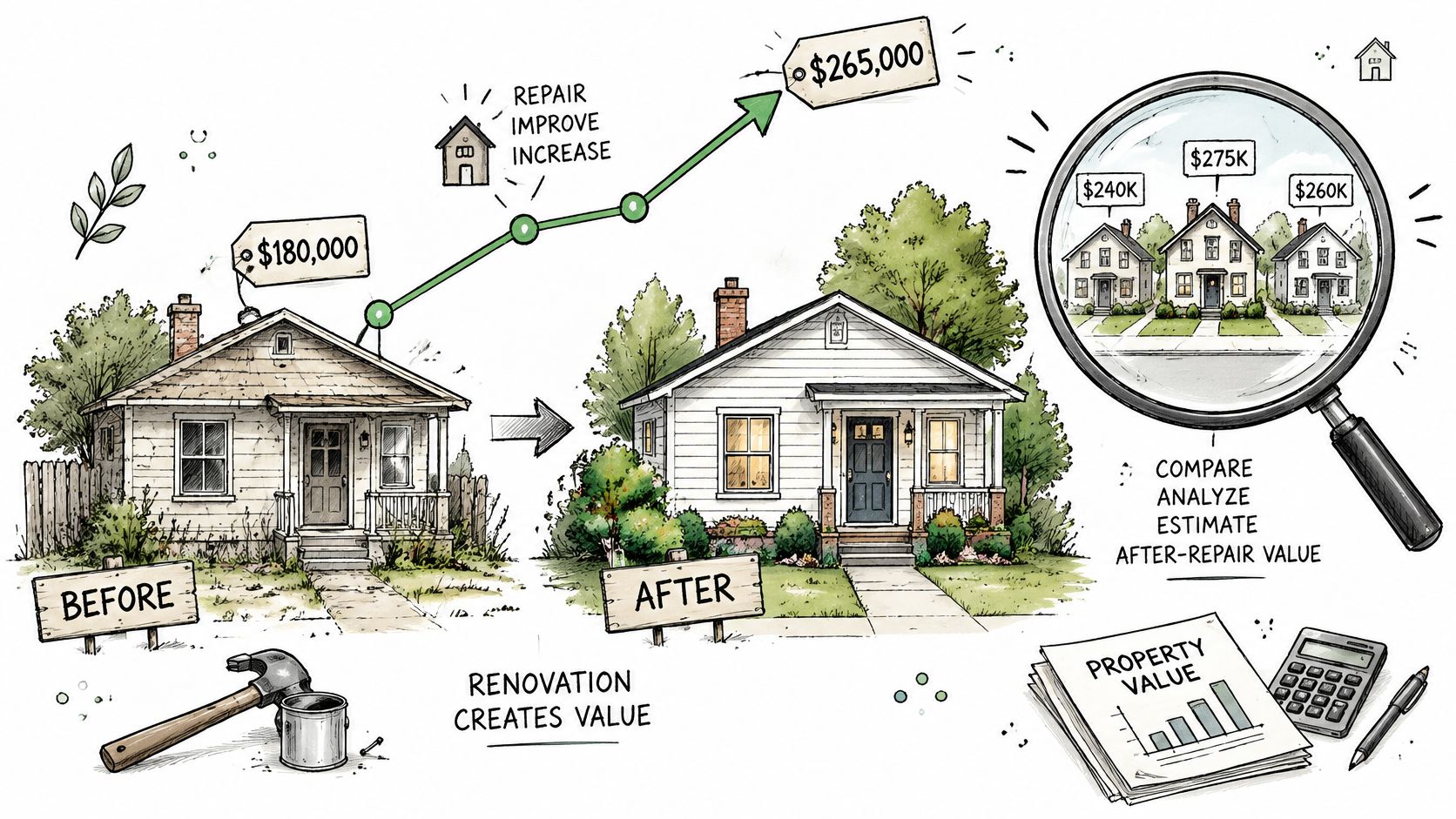
After-repair value, often shortened to ARV, estimates value after the planned improvements. Ground-up projects may use an as-completed valuation based on plans and specifications; the lender determines which valuation method and report are acceptable.
For regulated banks, the federal interagency real-estate-lending guidelines establish an 85% supervisory loan-to-value ceiling for one- to four-family residential construction. That is a bank supervisory benchmark, not a universal down payment rule or a statement of Quick Lending's lending limits.
Support the finished value with comparable properties
An investor renovating a Houston home should examine recent sales of properties with similar location, size, age, condition, and buyer appeal. A nearby luxury renovation isn't necessarily a useful comparison for a modest rental-grade project.
The valuation package should explain meaningful differences, including additions, garage conversions, lot characteristics, and finish quality. Active listings can help describe competing inventory, but asking prices aren't completed sale prices.
Valuation discipline: A higher renovation budget doesn't automatically produce an equal increase in market value.
The lender may also evaluate loan-to-cost, which compares financing with eligible project costs, separately from loan-to-value. A strong projected resale price doesn't eliminate a cash shortfall if the lender restricts advances against cost.
Investors should compare the supported finished value with acquisition, construction, financing, carrying, and disposition expenses. If the margin depends on achieving the neighborhood's highest sale price, the project needs a more conservative feasibility review.
5. Exit Strategy
Selling and refinancing are different repayment plans, and each needs its own supporting evidence. A statement that the property can always become a rental isn't a backup exit unless the financing and operating assumptions work.
Federal supervisory guidance directs lenders to consider repayment capacity, property value, invested equity, secondary repayment sources, and takeout commitments. For investment construction, the practical question is whether the proposed exit can repay the debt within the agreed loan period.
A flipper's exit plan should connect the construction schedule to listing preparation, marketing, buyer financing, and closing. A landlord's refinance plan should address completed condition, expected rent, lease-up, and the intended long-term financing route.
Test the backup rather than naming it
Consider an investor who intends to sell after renovation but proposes renting if buyer demand slows. The backup requires more than a rental estimate.
- Financing feasibility: Identify whether the expected completed property and borrower profile could support an appropriate refinance.
- Operating feasibility: Compare achievable rent with debt service, taxes, insurance, maintenance, and vacancy exposure.
- Cash availability: Determine whether reserves can cover a longer holding period and additional closing expenses.
Quick Lending's fix-and-flip financing guide for beginners explains the short-term financing context behind a resale strategy. The construction plan and repayment plan should be developed together, not separately.
Refinancing isn't automatic when construction ends, and projected rent isn't the same as available payoff cash. A licensed mortgage professional can evaluate potential takeout financing, while an appropriate financial adviser can help assess broader investment risks.
A credible exit includes a primary repayment path, evidence supporting it, and a realistic response if timing changes.
6. Contractor Qualifications and Insurance
The contractor with the lowest proposal can become the most expensive choice if exclusions, scheduling conflicts, or financial weakness stop the work. Lenders review the execution team because incomplete construction can impair both repayment and collateral value.
Fannie Mae's HomeStyle Renovation collateral guidance requires evaluation of contractor qualifications, experience, required credentials, and financial ability to complete the work. It also recognizes that licensing requirements depend on applicable state and local law, rather than assuming every trade operates under the same licensing system.
Assemble a contractor file before mobilization
A builder using a general contractor should obtain a written agreement describing scope, price, schedule, payment milestones, and responsibility for subcontractors. An investor hiring trades separately needs equally clear responsibility for coordination and inspections.
- Credentials: Verify required licenses or registrations with the relevant authority.
- Insurance: Obtain current certificates and confirm coverage details with the insurer or agent.
- Relevant references: Request examples of comparable completed projects and contact the owners.
- Payment documentation: Establish how invoices, change orders, and any required lien waivers will be collected.
For example, an investor replacing electrical and plumbing systems should verify the relevant trade credentials before scheduling work. A general renovation portfolio doesn't establish that every subcontractor is qualified for specialized work.
Insurance review should address the actual project and parties involved, not merely confirm that a certificate exists. Coverage limits, exclusions, workers' compensation obligations, and project-specific protection should be discussed with a qualified insurance professional.
A contractor's availability is useful only if the contractor also has the people, documentation, and financial capacity to finish.
Contractor substitution can affect scope, price, and lender approval conditions. Identifying an alternative early is more practical than assuming a replacement can begin immediately under the original arrangement.
7. Financial Profile, Liquidity, and Reserves
Equity and liquidity aren't interchangeable. An investor may own valuable property yet lack the accessible cash needed for deposits, carrying expenses, or a delayed draw.
The financial review should show both the borrower's contribution and the funds remaining after closing. Depending on the program, lenders may examine bank statements, asset records, existing debts, income documentation, entity records, and the source of invested funds.
Fannie Mae's application-package rules require a complete borrower application and supporting underwriting records, including income, assets, debts, and property documentation. Those requirements apply within that lending framework, but the broader preparation lesson is useful: borrower finances and property feasibility must be documented together.
Separate committed money from available reserves
A rental investor might prepare a monthly carrying-cost forecast that includes taxes, insurance, utilities, financing payments, and maintenance before occupancy. The same forecast should show what happens if construction or refinancing takes longer than planned.
- Cash to close: Identify the borrower contribution and transaction expenses due at closing.
- Project cash: Account for costs not funded by the loan and payments due before reimbursement.
- Uncommitted reserves: Show funds remaining after other property obligations and project commitments.
Counting the same cash as both the down payment and emergency reserve overstates readiness. Funds earmarked for another renovation are not freely available just because they appear in the same bank account.
Source-of-funds documentation also matters. Transfers, contributed land, paid predevelopment expenses, and borrowed funds may receive different treatment depending on the lender and loan structure.
A clean financial package reconciles balances, obligations, and project uses without unexplained gaps. For investors managing several properties, a licensed CPA or financial adviser can help assess how additional construction commitments affect overall liquidity.
8. Permits, Plans, and Project Timeline
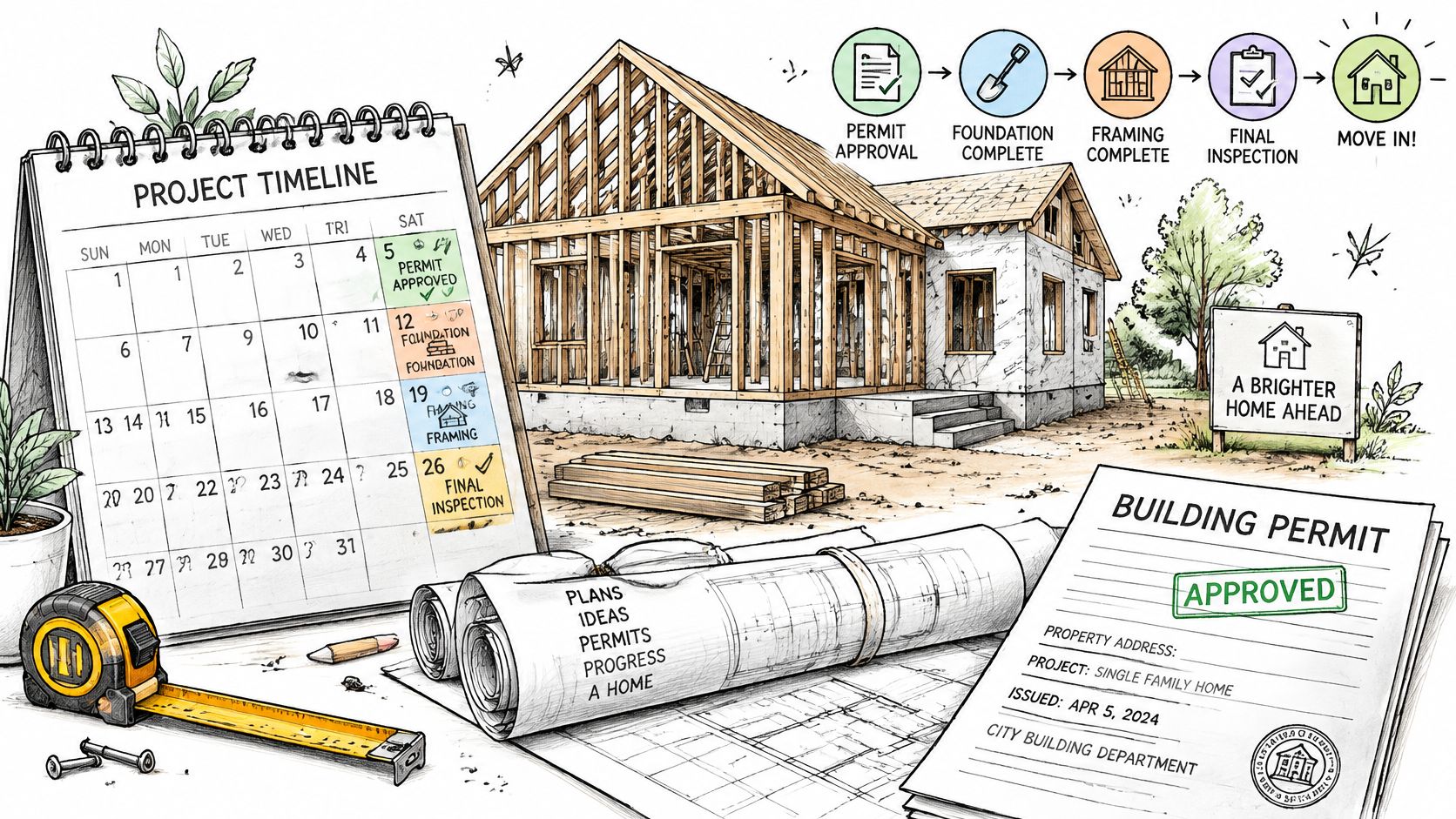
A construction schedule is only credible if the necessary approvals and inspections fit inside it. A contractor's estimated work duration doesn't automatically include plan review, revisions, utility coordination, material lead times, or final signoff.
For Houston-area projects, investors should confirm the responsible permitting jurisdiction and the requirements for the specific address and scope. Structural modifications, additions, and trade work can require different approvals, and an existing building doesn't establish that every proposed use or alteration is permitted.
Build the schedule around dependencies
A small developer planning a duplex should distinguish design completion, permit submission, approval, site preparation, construction milestones, inspections, and occupancy-related approvals. Work that depends on an inspection shouldn't be scheduled as though that inspection has already passed.
- Approval status: Label documents as proposed, submitted, approved, or awaiting revision.
- Responsible person: Identify who handles permit applications, inspection requests, and corrections.
- Schedule allowance: Include room for review comments, weather disruption, and trade coordination.
- Completion evidence: Organize permits, inspection records, approved changes, and final documentation.
For an interior rehabilitation, electrical and plumbing requirements should be investigated before crews cover walls or install finishes. Correcting concealed work later can disrupt both the budget and the draw schedule.
A shared digital project folder helps the borrower, contractor, and lender work from current documents. Superseded plans should be clearly identified so an inspector doesn't evaluate work against an outdated scope.
Permits, plans, budget, and timeline must describe the same project. When an approval changes the proposed work, the borrower should update the related cost and completion assumptions rather than leave contradictory versions in the application.
Construction Loan Requirements at a Glance
| Requirement | What It Covers | Why Lenders Review It | Biggest Preparation Challenge |
|---|---|---|---|
| Detailed Scope of Work and Renovation Plan | Itemized repairs and upgrades, work sequence, and intended finished condition | To assess project feasibility, funding needs, and alignment with the exit plan | Thoroughly documenting work, especially when older properties may have hidden issues |
| Construction Budget and Draw Schedule | Costs by category, contingency, timeline, and milestone-based funding requests | To understand total project costs and how loan funds will be used over time | Keeping estimates realistic as labor, material prices, or draw requirements change |
| Borrower Experience and Track Record | Prior project types, outcomes, contractor relationships, and management experience | To gauge the borrower's ability to manage construction and handle delays | Providing detailed evidence of experience or a credible support plan if new to renovation |
| Property Valuation and After-Repair Value Analysis | Current value, projected value after renovations, comparable sales, and valuation reports | To assess the property as collateral and evaluate the project's potential outcome | Supporting projected values with relevant data while accounting for market uncertainty |
| Exit Strategy | Planned sale, refinance, or rental; timing; backup plan; and carrying capacity | To evaluate how the borrower expects to repay the loan | Building a realistic repayment plan that can withstand delays or market changes |
| Contractor Qualifications and Insurance | Licenses, insurance, bids or contracts, references, and payment documentation | To confirm the work is assigned to qualified professionals and reduce project risks | Gathering and verifying current contractor documents before closing |
| Financial Profile, Liquidity, and Reserves | Available cash, debts, closing funds, reserves, and sources of equity | To assess the borrower's ability to fund costs and manage unexpected expenses | Organizing financial records and maintaining enough liquidity for project needs |
| Permits, Plans, and Project Timeline | Permit requirements, drawings, inspections, construction schedule, and delay plans | To check that work can proceed lawfully and on a realistic schedule | Navigating unpredictable permit processing, plan changes, and inspection timing |
Getting Your Project Ready to Fund
The most useful application package connects the scope, budget, project history, valuation support, exit plan, contractor records, financial statements, and permit status. Consistency matters more than presentation: a renovation included in the valuation should also appear in the scope, contractor pricing, and schedule.
Before applying, investors should reconcile funding sources with total uses and identify unresolved items explicitly. A pending permit or contractor selection isn't necessarily the same as a completed requirement, and early disclosure gives the lender a clearer basis for feedback.
How Quick Lending may help
Quick Lending is a Houston-area hard money lender serving real estate investors and entrepreneurs. Its Loan Officer discusses the borrower's objectives, offers feedback on available options, and guides the documentation process.
Loans may close in as little as five days, depending on the project and completion of the necessary review and closing requirements. That possibility isn't a guaranteed deadline, and prompt paperwork doesn't eliminate property, title, or other transaction conditions.
Quick Lending's residential loans carry a full 12-month term with no prepayment penalty and no credit check. Terms and project suitability remain subject to review and approval, so a borrower's proposed construction and repayment schedule still needs careful evaluation.
Frequently asked questions
How long does construction loan approval take?
Timing depends on the lender, property, documentation, and unresolved closing conditions. Quick Lending's potential closing timeline shouldn't be treated as a promise for every construction or renovation transaction.
Do construction lenders check credit?
Policies vary by loan program. Quick Lending's residential loan policy is described above; borrowers shouldn't assume the same policy applies to every lender or financing category.
How are construction draws handled?
Draw arrangements depend on the approved loan documents and project. After funding, Quick Lending's Portfolio Manager explains the draws and payoff process, helping borrowers understand how to manage those stages.
Which investment properties may be considered?
Property eligibility depends on the financing program, ownership structure, intended use, and proposed work. Investors should provide the address, property type, scope, purchase contract if applicable, and intended exit so Quick Lending can evaluate the appropriate route; the company doesn't provide consumer personal loans.
A funding-ready project doesn't require pretending every uncertainty has disappeared. It requires showing what is known, what remains unresolved, who is responsible, and how the borrower intends to complete and repay the project.
Quick Lending offers short-term investment-property financing for Houston-area acquisitions, renovations, and transition periods before sale or long-term financing. Investors can visit Quicklending LLC to request a quote or discuss their scope, budget, and exit plan with the team, subject to review and approval.