

Can an investor qualify for a property loan without fitting the same income and credit profile required for a primary-home mortgage? Investment property loan requirements depend on the financing purpose, particularly whether the borrower needs a long-term rental mortgage or short-term funding to acquire, renovate, and sell or refinance.
Asset-based and hard money lenders focus heavily on the property, the proposed improvements, the borrower's available capital, and the repayment plan. That doesn't mean the borrower's finances disappear from review. It means the lender may weigh them differently from a conventional mortgage lender.
For Houston investors, the practical question is whether the financing fits the property's current condition and the work ahead. A vacant renovation project needs a different analysis from an occupied rental with documented income.
Practical rule: Acquisition financing and permanent financing should be planned together, even when different lenders handle them.
The core requirements involve credit, equity, collateral value, property eligibility, experience, repayment, cash flow, and documentation. Quick Lending's asset-based approach may offer a potential fit for time-sensitive investment projects, subject to review and approval. Strong preparation still matters: speed works best when the borrower can explain the deal clearly and support the numbers.
Table of Contents
- 1. Credit History and Credit Profile
- 2. Down Payment and Borrower Equity
- 3. Loan-to-Value and After-Repair Value Review
- 4. Property Type, Condition, and Eligibility
- 5. Investor Experience and Track Record
- 6. Exit Strategy and Repayment Plan
- 7. Income, Debt, and Cash Flow Considerations
- 8. Project Documentation and Closing Readiness
- The 8 Investment Property Loan Requirements at a Glance
- Prepare Your File, Then Move on the Deal
1. Credit History and Credit Profile
Credit matters differently across loan programs. Conventional lenders assess the borrower's credit alongside income, debts, and other eligibility requirements. Asset-based lenders may place greater emphasis on collateral, project feasibility, and repayment, although credit policies vary.
A borrower shouldn't assume that every hard money lender uses the same credit standard. Nor should an investor assume that a strong property automatically resolves concerns about unpaid obligations or limited financial capacity.
For example, an experienced flipper with older late payments may present a viable project supported by conservative comparable sales, documented funds, and a realistic renovation budget. That scenario calls for a different review from an application with unresolved financial obligations and no clear source of carrying-cost payments.
Separate Acquisition Eligibility From Refinance Eligibility
A borrower's immediate financing option might not use the same credit criteria as the eventual permanent mortgage. If refinancing is the exit, the investor should establish whether the future lender's requirements are achievable before committing to the acquisition.
Useful preparation includes:
- Review the credit file: Identify errors and unresolved accounts before approaching a permanent lender.
- Explain material events: Prepare factual explanations and supporting records for significant payment problems when relevant.
- Avoid assumptions: Confirm the applicable program's policy rather than relying on a generic investment-loan score.
- Check the exit: Discuss anticipated refinance eligibility with the intended long-term lender.
A first-time investor with limited credit history should also organize evidence of savings, contractor support, and project planning. Those materials don't guarantee approval, but they help distinguish a prepared borrower from an incomplete application.
2. Down Payment and Borrower Equity

The down payment isn't the entire cash requirement. Investors also need to account for closing expenses, prepaid items, work paid before reimbursement, and operating funds retained after closing.
In asset-based lending, borrower equity carries more weight than it does in a conventional file. The property and the borrower's cash position do much of the work that income documentation performs elsewhere, so the required contribution follows the approved financing structure and the collateral analysis. Quicklending's down payment and loan-to-value requirements vary by market, which means the written terms for a specific property are the only reliable benchmark for planning.
A Houston investor buying a dated single-family home through an LLC can have enough set aside for the purchase contribution and still come up short on insurance, contractor deposits, utility activation, and the interest payments due during renovation. Committing every available dollar at closing leaves little room for execution.
Request a Complete Cash-to-Close Estimate
Quicklending's closing cost calculator estimates cash to close, proof of funds needed, and the monthly payment. Run those figures early. They show whether the capital on hand covers the whole project, not just the acquisition.
Preparation should include:
- Document the funds: Keep statements and records explaining transfers or deposits.
- Separate project capital: Distinguish the purchase contribution from renovation and carrying-cost funds.
- Identify payment timing: Establish which expenses must be paid before any anticipated construction reimbursement.
- Preserve liquidity: Avoid committing all available cash to the acquisition itself.
Quicklending's guide to investment property down payments provides additional preparation context.
Compare financing structures on the capital they leave available to complete the project and repay the loan. The smallest initial contribution often produces the thinnest margin for execution.
3. Loan-to-Value and After-Repair Value Review
An attractive purchase price doesn't establish the property's lending value. Loan-to-value, or LTV, compares the loan amount with the property value accepted by the lender. For a renovation project, after-repair value, or ARV, estimates what the completed property could be worth.

Consider a dated Houston house surrounded by renovated sales. Those sales may support the proposal, but only if their location, size, condition, and finish quality reasonably match the planned result. A nearby luxury renovation isn't automatically a suitable comparable for a modest cosmetic update.
Loan-to-cost, or LTC, is different. It compares financing with the project costs the lender recognizes. Borrowers need to understand both the valuation basis and the eligible-cost basis before estimating their contribution.
Support the Value With the Actual Scope
A useful valuation package connects the proposed work to the projected selling price. Include recent comparable sales, property photographs, contractor bids, and a scope that explains the finished condition.
An optimistic resale estimate doesn't replace comparable sales. The stronger application explains why a buyer would pay the projected price for the completed property.
The lender may accept a lower value than the investor expects. That can require additional equity, a revised purchase price, a smaller scope, or a decision not to proceed.
A local real estate professional can help evaluate comparable properties and likely buyer expectations. The investor should also test whether the deal still works if the resale price is lower or the renovation costs more than initially planned.
4. Property Type, Condition, and Eligibility
A repair-heavy property can be suitable collateral without being ready for conventional financing. That distinction is a primary reason investors consider hard money for acquisitions and renovations.
Eligibility still depends on more than the presence of real estate. The lender needs to understand the property's use, location, physical condition, ownership, and proposed improvements. Asset-based financing doesn't eliminate title problems or make an impractical rehabilitation feasible.

A vacant Houston bungalow needing roof, electrical, and kitchen work may warrant a rehabilitation review. The lender still needs a credible scope, sufficient funding, and a supported completed value. If the seller's ownership is affected by unresolved probate, the title issue requires separate attention before closing can proceed.
Investigate Before Committing
Property preparation should address distinct risks rather than treating inspection as a single checkbox:
- Physical condition: Obtain inspections and specialist evaluations for suspected structural or major-system problems.
- Repair feasibility: Identify permitting, access, utility, and contractor constraints.
- Title readiness: Give the title company information about liens, ownership questions, or known disputes.
- Program fit: Confirm that the property's location, intended use, and ownership arrangement fit the proposed financing.
Conventional eligibility is also program-specific. Freddie Mac's investment-property mortgage guidance identifies additional requirements involving reserves, rental-income qualification, housing obligations, and rent-loss insurance.
For a buy-and-hold investor, the property must fit both the acquisition strategy and the eventual permanent-financing requirements. Financing the purchase is only part of the plan.
5. Investor Experience and Track Record
A completed project history helps a lender evaluate whether the borrower can execute the proposed work. Relevant experience matters more than an impressive but unrelated résumé.
A borrower who has managed cosmetic renovations may understand contractor scheduling and resale preparation. That doesn't establish readiness for structural reconstruction or ground-up development. The application should identify what the investor has completed and who will handle unfamiliar work.
For a first-time investor, the supporting team becomes especially important. A qualified contractor's detailed bid, references, insurance, and realistic schedule provide more useful information than a general statement that renovations will be straightforward.
Present Evidence of Execution
A concise project history can include:
- Comparable work: Property type, renovation scope, and the borrower's responsibilities.
- Financial results: Documented acquisition, improvement, and disposition information when available.
- Team qualifications: Relevant contractor credentials, references, insurance, and specialist involvement.
- Management plan: Who approves changes, monitors progress, and keeps spending aligned with the budget.
Experience also affects some permanent-loan calculations. Fannie Mae's rental-income guidance places limits on rental-income use when a borrower has no property-management experience or less than 12 months of experience.
That makes honesty important. A new landlord shouldn't assume that projected rent will receive the same treatment as documented income from an established rental operation.
A smaller, clearly scoped project may be more manageable for a new investor than a distressed property with uncertain repairs. An experienced partner can help, but the application should explain that partner's actual role rather than merely attaching a name.
6. Exit Strategy and Repayment Plan
Short-term financing needs a defined payoff path. For a flip, that generally means selling the completed property. For a rental acquisition, it may mean refinancing after repairs, leasing, and stabilization.
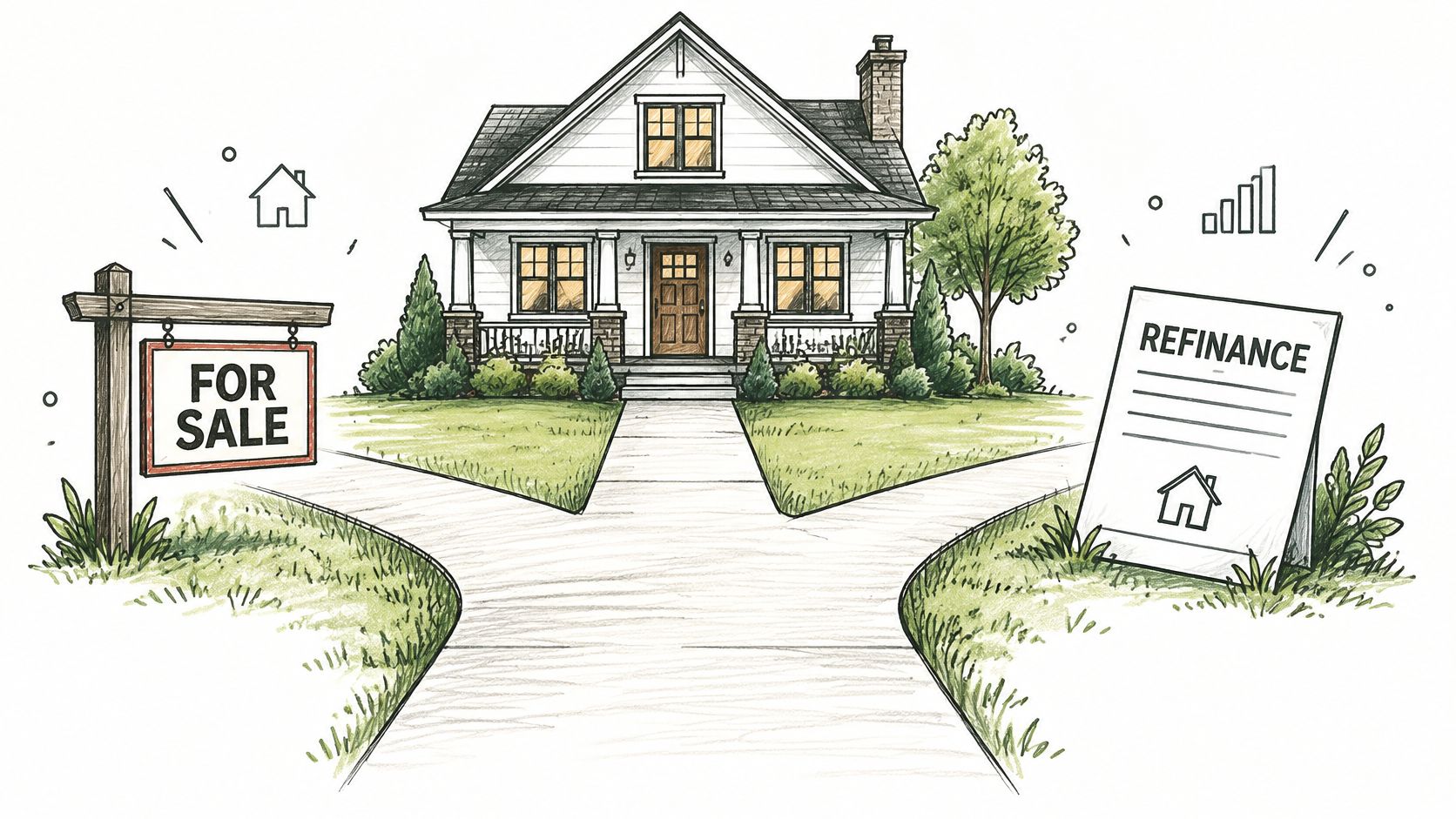
A buy-and-hold investor might acquire a vacant house, renovate it, secure a tenant, and apply for permanent financing. That sequence only works if the borrower and property can satisfy the future lender's requirements. A successful renovation doesn't guarantee refinance approval.
Conventional reserve requirements deserve early attention. Fannie Mae's minimum-reserve guidance requires six months of the qualifying housing expense for an investment-property transaction, separate from down payment, closing costs, and project capital.
Build a Primary Exit and a Workable Backup
For a sale exit, estimate net proceeds after selling expenses and loan payoff, not merely the expected contract price. For a refinance exit, discuss credit, income documentation, rental evidence, property condition, and liquidity with the intended permanent lender.
Exit-plan test: A backup strategy is useful only when the borrower can afford it and qualify for the financing it requires.
Stress-test construction delays, a slower listing period, and a lower supported valuation. Obtain the proposed loan's maturity terms and any extension conditions before relying on extra time.
Quick Lending's explanation of bridge and hard money loans helps investors distinguish transitional funding from permanent debt. The key trade-off is clear: short-term flexibility can support acquisition and rehabilitation, but the borrower still needs an achievable repayment event.
7. Income, Debt, and Cash Flow Considerations
Asset-based lenders weigh income differently than a bank does. Personal salary and tax returns matter less on a short-term renovation or bridge loan; the property's value, its ability to service its own debt, and the borrower's experience carry the decision. Quicklending's Residential Loan reflects that approach: a 12-month, interest-only structure with no credit check, where the deal stands on the property's performance rather than the borrower's paycheck.
Lighter income scrutiny still leaves the carrying costs on the borrower. During renovation, the property may produce no rent while the borrower pays interest, insurance, utilities, taxes, maintenance, and contractor expenses. For a rental exit, distinguish advertised rent from qualifying income. A lender may use documented leases, appraisal-supported market rent, operating history, or other permitted records, depending on the program.
As a worked example, take $2,400 in documented gross monthly rent. A lender that credits 75% of that figure recognizes $1,800 in qualifying income. Against $1,950 in PITIA, the property produces a negative $150 monthly contribution, so gross rent alone overstates what underwriting will count.
Model Both Renovation and Stabilized Operations
Create separate budgets for the vacant construction period and the occupied rental period. A duplex investor should account for leasing delays and operating expenses before assuming completed repairs produce full collections.
- During renovation: Include loan payments, utilities, insurance, security, and ongoing property expenses.
- After leasing: Include maintenance, management, vacancy, association dues where applicable, and debt payments.
- For qualification: Gather leases, rent comparables, operating records, and any requested tax documentation.
Insurance deserves a real quote, not a placeholder. Federal Reserve research on apartment buildings found average multifamily property-insurance costs rose from $39 per unit per month in 2019 to $68 in 2024.
Those figures are not a quote for a Houston house. They show why insurance assumptions need verification before relying on projected cash flow. A licensed insurance professional should confirm coverage for vacancy, renovation, and eventual occupancy, and an accountant can review the operating assumptions behind the projection.
8. Project Documentation and Closing Readiness
An organized file lets the lender evaluate the actual transaction rather than reconstruct it through repeated requests. Closing readiness means the contract, ownership, property, budget, insurance, and funding arrangements agree.
For a renovation purchase, the borrower might submit a signed contract, property photographs, an itemized repair scope, and contractor bids. A new entity may also need formation records, an operating agreement, and tax-identification documentation, depending on the transaction's requirements.
Organize the File Around Decisions
Quick Lending's renovation-loan application guide offers preparation context. The transaction-specific document list should remain the working reference.
- Purchase package: Contract, amendments, seller information, and relevant deadlines.
- Project package: Repair scope, bids, schedule, and a separately identified contingency.
- Borrower package: Requested entity records and evidence of available funds.
- Closing package: Title updates, insurance arrangements, and outstanding conditions.
An auction investor can prepare entity records, proof of funds, and a preliminary scope before bidding. A wholesaler can coordinate the contract, end buyer, lender, and title company early, without assuming the proposed closing structure will automatically be accepted.
Quick Lending's Loan Officer guides the borrower through documentation. Once the documentation is received, the Customer Relations Manager and Loan Transaction Manager coordinate with the borrower toward closing.
Prompt responses help, but third-party work still matters. Title resolution, insurance placement, and incomplete transaction documents can affect timing regardless of how quickly an application is submitted. Entity and ownership questions should be reviewed with a licensed attorney or title professional.
The 8 Investment Property Loan Requirements at a Glance
Use this as a final screen before the contract clock starts. In asset-based underwriting, value, equity, and the exit usually carry the file; credit and income are often read for context rather than as the whole decision. Program rules still differ: Quick Lending's Residential Loan has a full 12 month term, no extension fees at 6 or 9 months, no prepayment penalty, and no credit check, while down payment and LTV requirements may vary by market.
| Requirement | Pass checkpoint | Have ready | Main deal risk |
|---|---|---|---|
| Credit History and Credit Profile | Report events are explained, dated, and consistent with the rest of the file | Recent credit report, dispute results, and a short letter for defaults, foreclosure, or bankruptcy | Old issues resurfacing late because explanations were vague |
| Down Payment and Borrower Equity | Cash to close covers equity, fees, reserves, and a clear source of funds | Proof of funds, bank statements, entity ownership records, and a written cash-to-close estimate | Verified funds falling short after closing costs are added |
| Loan-to-Value and After-Repair Value Review | Purchase price, scope, and supported value leave margin inside the LTV cap | Comparable sales, repair budget, valuation support, and scenarios at 60%, 65%, and 70% Max LTV | ARV assumptions that need perfect comps to work |
| Property Type, Condition, and Eligibility | Property fits the correct residential or commercial lane | Photos, inspection or condition notes, title status, entity documents, and repair scope | Unit count or use pushing the deal into a different program |
| Investor Experience and Track Record | Prior work or the hired team matches the difficulty of the project | Project list with addresses, contractor license and insurance, bids, and references | A strong contract supported by an untested execution plan |
| Exit Strategy and Repayment Plan | Sale, refinance, or other payoff fits the actual term and holding costs | Payoff timeline, milestones, carry budget, backup exit, and 6- and 9-month checkpoints on a 12 month loan | Assuming an extension instead of planning for delays |
| Income, Debt, and Cash Flow Considerations | Property debt to income and reserves support payments during work and marketing | Leases or rent comparables, obligation list, tax and insurance estimates, and monthly carry budget | Rent projections that ignore vacancy, repairs, or slower refinance timing |
| Project Documentation and Closing Readiness | Underwriting questions are answered before conditions are issued | Contract, scope, bids, entity papers, proof of funds, title items, insurance, and payoff information | Third-party delays in title, insurance, or document completion |
A complete file can still move quickly; Quick Lending says loans can close in as little as five days. Weak files rarely fail from one item, so fix the lowest row first.
Prepare Your File, Then Move on the Deal
Checking all eight investment property loan requirements before making an offer turns the list into a go/no-go test. The strongest file ties the purchase price to supported value, the repair scope to a real budget, the cash to close and carrying costs to available funds, and the exit to a timeline the property can support.
For a time-sensitive Houston deal, preparation means knowing which issue could stop the closing: title, eligibility, proof of funds, entity documents, an unclear scope, or a weak repayment plan. Address those while the option period, auction deadline, or contract timeline still gives you room to revise, document, or walk away.
Common Financing Questions
Can a first-time investor qualify for asset-based financing?
A newer investor can be considered when the property, numbers, and plan are strong. Asset-based review weighs the collateral and the project heavily, but a thinner track record needs more support from a realistic scope, documented funds, contractor bids, insurance, and a clear exit.
Can a vacant property qualify before it produces rent?
Short-term acquisition or rehabilitation financing can evaluate a vacant property on the purchase, condition, repair plan, and exit rather than current rent. The borrower still needs a credible carrying-cost budget and an achievable sale or refinance.
Does sufficient property equity guarantee approval?
No. Value is central, and title, eligibility, available capital, execution risk, documentation quality, and repayment can still affect the decision.
How Quicklending Works
Quicklending offers short-term, interest-only residential investment loans with no prepayment penalty and no credit check. Its residential loans have a full 12-month term, with no extension fees at six or nine months, and can close in as little as five days when the file is ready. Down payment and LTV requirements can vary by market.
Its five-step process runs through Contact Us, Loan Officer, Documentation, Closing Team, and Get Your Funds. Borrowers start by clicking Get a Quote, then discuss their objectives with a Loan Officer who gives feedback on available options. After the application starts, the borrower submits paperwork in a timely manner while the Loan Officer guides the documentation process; once documentation is received, the Customer Relations Manager and Loan Transaction Manager work toward closing, and after funding the Portfolio Manager explains draws and payoff.
A five-day closing helps most when the file is already clean. Missing entity records, unresolved title issues, or an unclear renovation budget still slow the work. Investors can click Get a Quote or call (713) 334-0762 ext 108 to discuss the property, renovation scope, available funds, and intended exit.
Quicklending LLC offers Houston-area real estate investors short-term financing for acquisitions, renovations, and transition periods before sale or long-term financing. Investors can visit Quicklending LLC, click Get a Quote, and discuss how their property, project budget, and repayment plan fit the available financing options.